

Short Summary:
AI in email marketing is revolutionary through predictive segmentation, personalized recommendations, dynamic content, and automated optimization. This article explores real-world case studies from brands using AI tools for marketing to improve conversions, engagement, and revenue, while highlighting practical strategies and risks marketers should consider.
In the past, email marketing was too straightforward.
You could collect people’s email addresses by getting them to subscribe to something. You then send monthly newsletters and create a welcome series for new subscribers, hoping someone will open and click your emails. Before, “personalization” usually meant adding a first name to the subject line and manually segmenting your list.
Today, advances in AI technology have shifted email marketing tools from sending one message to every customer toward creating targeted and personalized communication. Marketers no longer need to guess what customers want to receive in an email.
This article explores how brands are using AI for email marketing, real-world examples of AI implementation, and results from recent AI in email marketing case studies.

What AI Actually Does in Email Marketing
Many would think that automated marketing campaigns fully operate without any human intervention. However, most companies apply artificial intelligence to only boost certain elements of the email marketing process.
The objective is not to substitute for marketers. Artificial intelligence aims to increase the intelligence and personalization of marketing campaigns.
The main uses of AI email marketing tools are as follows:
Predictive Segmentation
Rather than relying on broad categories such as age, location, or buying behavior, AI-powered segmentation expands traditional customer segmentation.
Machine learning analyzes customer digital activity to identify which customers are most likely to buy, stop doing business, unsubscribe, or respond to promotional offers.
This allows marketing teams to create micro-segments and connect with the right customers. For example, a beauty brand may target customers who are:
- Most likely to purchase again within 14 days
- At risk of becoming inactive subscribers
- High-value customers who are likely to respond to premium-priced products
- In need of onboarding assistance
For these reasons, AI is becoming essential in email marketing, not just an added feature. It gives marketers the ability to identify and act on patterns that would otherwise require hours or even days of manual analysis across thousands or millions of customers.
Personalized Product Recommendations
Email marketing uses recommendation engines more than any other form of AI.
Advanced AI tools for email marketing identify each recipient’s previous browsing habits, purchasing behavior, abandoned carts, and how other customers interacted with the same products. This information allows marketing teams to send emails with a stronger sense of personalization.
Recommendation engines have been used in email by streaming services, e-commerce brands, and marketplaces for years. However, recent advances in artificial intelligence now allow small- to medium-sized marketers to use these same tools in their email marketing campaigns.
AI-Generated Copy and Subject Lines
Content generation is one of the most common methods that marketers use to grow their email marketing business with AI.
Now, it is possible to generate the following:
- Multiple subject line variations
- Promotional copy
- Product descriptions
- Call-to-action
- Re-engagement messages
While marketers control the brand voice and overall strategy, AI allows teams to prototype various design concepts much faster and provides instant comparison metrics, allowing for quicker testing and measurement of results.
Send-Time Optimization
Open rates and conversions can drastically change based on when someone views an email. With send-time optimization, emails are delivered when subscribers are most likely to read and engage. Instead of sending emails at one defined time, they can be sent more strategically.
Some people regularly check emails first thing in the morning, while others engage during lunch breaks or late in the evening. AI learns these patterns on its own. This is one of the most obvious ways AI email marketing helps improve campaigns.
Dynamic Content
Email personalization through dynamic content is based on how users interact with messages.
Artificial intelligence assists in determining:
- The best products to show
- The best promotions to spotlight
- The best images to share
- The best call to action for conversions
Two subscribers can receive the same email design, yet the content blocks will differ. The result is personalized customer-to-customer communication rather than creating one-way communications through campaigns.
Form and List-Growth Optimization
AI can also assist with acquiring new subscribers. AI-generated signup form tests can determine the following:
- Headlines
- CTA
- Incentives
- Where on the page should they be placed
- Advertising around the page
According to Salesforce, AI for email marketing uses machine learning to personalize content, optimize send time, and segment the audience. This is a reflection of where the market is heading: from campaign-based email to customer-specific communication.
Recent Case Studies: How Brands Are Using AI in Email Marketing
Recent case studies are showing how AI has improved email marketing results.
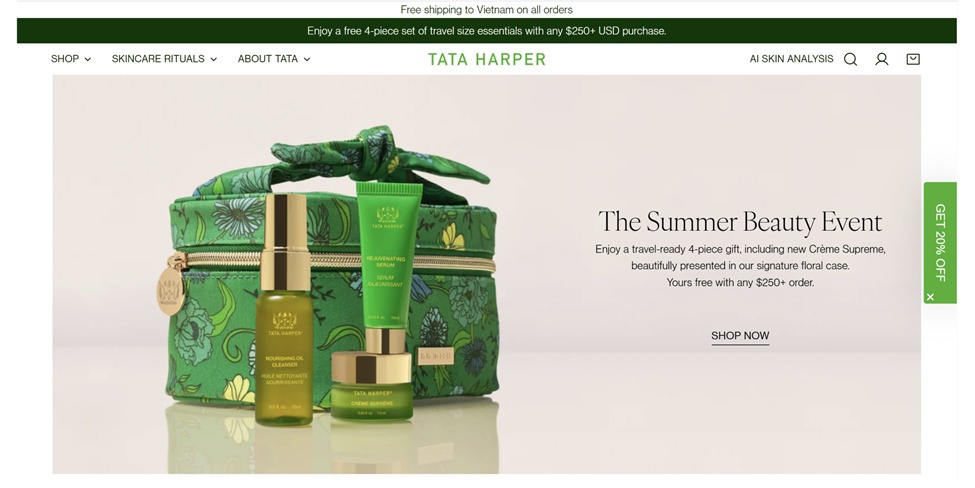
Tata Harper – AI-Optimizing Sign-Up Form Testing Increased Conversion Rate by 65%⁺
Tata Harper is a luxury skincare company that optimized its sign-up conversion rate with an AI-driven email form. Before implementing any email campaigns, Tata Harper had an average conversion rate of a little less than 40%. The company implemented an AI-based email sign-up form that adjusted the messaging and design on an ongoing basis based on visitor actions.
Tata Harper tested all of the following with the new form:
- Headlines of 3-4 different forms
- Position of the offers
- Visual formats of the forms
- CTA button formats
As a result of using AI in email marketing to optimize their email sign-up forms, Tata Harper was able to achieve a 65%+ increase in conversion rates. Notably, this increase in conversion rates occurred before the email campaigns had started. The additional sign-ups provided a larger pool of potential subscribers to enter the email marketing funnel.
This case study illustrates one of the reasons that AI is becoming increasingly prevalent in email marketing: optimization has evolved, and the process now includes areas of acquisition and lifecycle strategy in addition to refining the content of email marketing.
Currys: AI-Personalized Creativity Increased CTR and Revenue
Electronics retailer Currys used AI-generated personalization to improve engagement metrics across campaigns.
Using machine learning, the company simply altered the following:
- Product Images
- Message Priority Within Content
- Product Recommendations
- Promo Highlighting
The company sent customized emails based on how often customers buy and what they buy, instead of sending everyone the same email.
The results included:
- Higher click-through rates
- Increased conversions
- Improved revenue per send
This case demonstrates how AI tools for email marketing increasingly combine personalization with creative optimization. The email itself becomes adaptive rather than static.
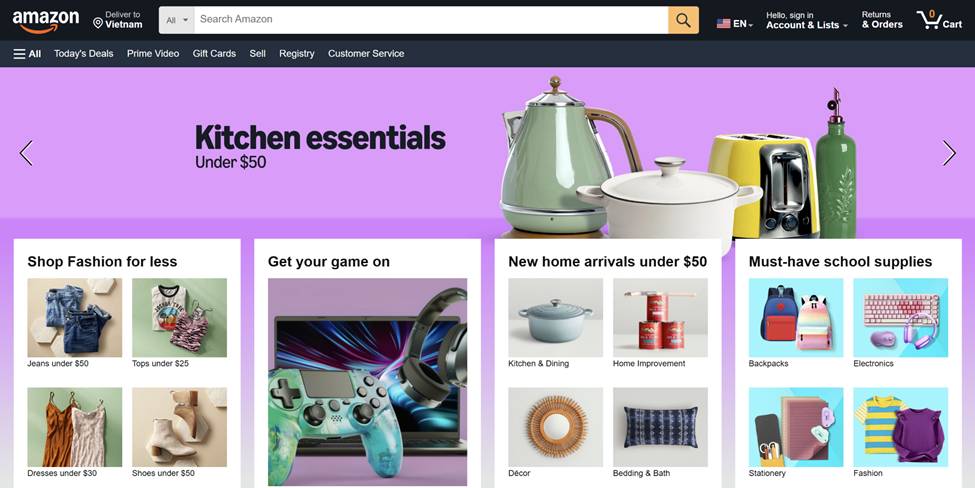
Amazon: AI Recommendation Engines Increased Revenue by 35%
One of the most notable uses of recommendation-driven marketing today is Amazon. Rather than sending identical promotional emails to every subscriber, Amazon integrates AI-powered product recommendations across different email touchpoints, such as personalized product suggestions, “Inspired by your browsing history” emails, abandoned cart reminders, post-purchase follow-ups, and reorder reminders.
These recommendations are generated using multiple customer signals, including:
- Browsing and Purchasing History
- Similar Users and Product Affinity
- Engagement Patterns
This strategy enables the brand to deliver more relevant content that encourages repeat purchases, cross-selling, and product discovery. In fact, Amazon’s AI recommendation engine reportedly generates up to 35% of its total sales revenue, highlighting the value of integrating AI-driven personalization into email marketing strategies.
As this example shows, the primary advantage of using AI for email marketing is reducing customer friction and helping customers discover relevant products faster.
Culture Kings: AI Helped Shift From Batch Messaging to Smarter Segmentation
AI has enabled Culture Kings to provide personalized recommendations for each subscriber and made sure to utilize these when composing their actual email communications. As an example of how this was accomplished, Culture Kings created campaigns that were more targeted towards:
- How likely a customer is to buy
- What a customer is interested in buying
- How often a customer engages with content
- How likely a customer is to convert from an email
This insight allowed Culture Kings to improve campaign relevance while reducing subscriber fatigue. This matters because over-emailing is one of the biggest reasons subscribers leave a brand’s list. AI gives brands more control and intentionality over who receives specific email campaigns.
This email marketing case study shows how segmentation strategies are evolving toward predictive and behavior-based approaches.
Jubilee Scents: AI-Driven Customer Categorization Increased Conversions by 12%
The AI-based customer classification for the fragrance company, Jubilee Scents, helped with targeting their campaigns to the right customers.
This was done using automated segmentation based on the following:
- The frequency of purchases
- How customers interact with the products
- Which products are purchased by customers
- How customers shop for the product(s).
Based on AI-driven analysis, the data was used to create personalized product recommendations and send customers targeted promotional messages.
Jubilee Scents saw a 12% increase in conversion rates through this process. While less dramatic than some high-profile case studies, it highlights an important point about AI in email marketing: even small gains can create significant cumulative benefits across the customer lifecycle.
What These Case Studies Have in Common
These email marketing case studies share many similarities despite differences in industry and business size.
The biggest common factor is personalization. Each successful case study used AI to improve communication by making messages more relevant to individual customers. The goal was not automation for its own sake, but more meaningful and relevant messaging.
They also rely on ongoing data analysis to improve content relevance. AI systems continuously learn and optimize campaign performance based on customer behavior data.
Another shared advantage is efficiency. AI allows marketers to:
- Generate multiple variations faster
- Analyze outputs automatically
- Reduce repetitive manual tasks
- Scale personalization across larger audiences
As a result, it allows marketers the opportunity to concentrate more on their strategy and creative direction.
Within this context, the best brands leverage artificial intelligence throughout the entire customer experience and not just during marketing campaigns. AI supports the following areas of the customer journey:
- Acquisition
- Onboarding
- Retention
- Reactivation
- Upselling
- Loyalty
Overall, email is integrated into complete lifecycle systems and not sent as individual marketing campaigns.

Practical Ways Brands Can Start Using AI in Email Marketing
Companies do not need to invest in large-scale enterprise-type solutions. Businesses can use AI tools for email marketing as part of their strategy today. Here’s how to:
Welcome Flow Personalization
Sending the same onboarding email template to every subscriber is no longer effective because it lacks personalization. AI makes it possible to send customized product recommendations and personalized email content based on individual preferences, helping create a stronger first impression.
Subject Line Testing
AI can generate multiple subject line variations before a campaign launches. By testing different versions, marketers can identify which subject lines are most likely to succeed. This is also one of the easiest ways to implement AI in email marketing.
Product Recommendation Blocks
Many e-commerce systems now include AI-powered recommendations within email workflows. The products shown in these email blocks automatically update based on customer shopping behavior.
Churn Prevention
AI can identify disengaged customers, allowing brands to send win-back materials, personalized recommendations, reactivation campaigns, and frequency adjustments to reduce unsubscribes and customer loss.
Signup Form Optimization
Email marketing case studies show that optimizing signup forms can significantly improve email marketing performance. AI-driven testing helps brands increase conversion rates before subscribers enter the sales funnel.
Content Repurposing
AI can also generate new ways to reuse existing content, including blog posts, product launches, social media content, webinars, and testimonials. This helps brands save time while improving communication consistency.
AI-powered creative tools such as image enhancers and background remover platforms also help marketers quickly adapt visuals for different email formats and campaigns.
Risks Marketers Should Watch
Email marketers have benefits from using AI in email marketing. However, they also face challenges with managing risks.
- Over-Automation. Automation can make emails feel formal and impersonal. AI-created content still requires human guidance to ensure it reflects the brand’s voice, remains emotionally relevant, and stays accurate.
- Data Privacy Concerns. Most personalization relies on customer data. Brands must be transparent about how they use data while complying with privacy laws and improving the customer experience.
- Generic AI Content. As more brands use generative AI, inboxes risk becoming filled with repetitive content. Brands that succeed with AI use it to enhance creativity rather than fully replace it.
- Poor Data Quality. An AI system’s performance depends on data accuracy. If a company uses incorrect or fragmented data from multiple sources, personalization performance will be compromised.
Final Takeaway
There is currently a major shift in email marketing, moving away from automated audience campaigns toward automated one-on-one customer communication.
AI in email marketing provides a major competitive advantage by helping marketers personalize content, continuously optimize campaigns, and respond faster to customer behavior than manual processes allow.
Brand leaders are using AI not to remove creativity, but to improve campaign relevance, increase efficiency, and make more informed marketing decisions.
As machine learning and generative features become more common in email marketing platforms, the cost of entry continues to decrease, allowing smaller brands to access tools once available only to enterprise-level companies.
After all, the future of email marketing will not be less human but more personalized, predictive, and responsive through AI-powered automation.