
DME billing software automates the entire claim lifecycle (from insurance eligibility verification to payment posting) so HME/DME providers spend less time on manual work and more time collecting what they’re owed. For billing managers dealing with payer-specific rules, recurring rentals, and Medicare compliance requirements, the right platform isn’t just a convenience: it directly determines how much revenue makes it into your bank account.
This guide compares the leading DME billing software options for 2026, covering key features, ideal use cases, and what sets each platform apart. If you’re evaluating alternatives to your current legacy system (or building out billing infrastructure for the first time) here’s what you need to know.
DME Billing Software Comparison: At a Glance
The table below covers the six platforms most commonly evaluated by HME/DME providers in 2026. NikoHealth leads the list as the only purpose-built, all-in-one platform that addresses billing, inventory, delivery, and AI integration in a single cloud-based system.
| Software | Key Features | Best For |
| NikoHealth | All-in-one platform: automated claims scrubbing, remittance posting, denial management, real-time inventory, order/delivery management, open API, AI integrations (Tennr, CompliantRx), mobile app (iOS/Android) | HME/DME providers replacing legacy systems and scaling operations end-to-end |
| Brightree | Claims management, patient intake, billing, delivery routing, analytics dashboards, payer rules engine | Mid-to-large DME providers already embedded in the Brightree/ResMed ecosystem |
| Bonafide Health | DME billing, eligibility verification, claim submission, reporting, document management | Smaller DME providers looking for straightforward billing-focused software |
| WellSky (formerly Mediware) | Revenue cycle management, referral management, scheduling, delivery, compliance tools, analytics | Large, complex DME/HME organizations with high-volume order management needs |
| Kareo (Tebra) | Medical billing, claims submission, insurance eligibility, reporting — general-purpose platform | Small DME practices needing basic billing, comfortable adapting a non-DME-native tool |
| FrameworkLTC | Long-term care billing, pharmacy integration, compliance tracking, claims management | DME providers with heavy long-term care and pharmacy overlap |
What Is DME Billing Software?
DME billing software is a purpose-built platform that manages the operational and financial workflows specific to durable medical equipment providers — including claim submission, payer rules compliance, denial management, remittance posting, and recurring rental billing. Unlike general medical billing tools, DME billing software is designed around the regulatory framework that governs DMEPOS suppliers: HCPCS code requirements, Certificate of Medical Necessity (CMN) documentation, Medicare capped rental rules, and DMEPOS accreditation compliance.
For HME/DME providers, clean claim rates and denial turnaround times are the primary drivers of cash flow. A single billing error that sends a claim to the wrong payer or misses a prior authorization requirement can delay payment by 30 to 90 days — or result in a write-off entirely. DME software reduces that risk through billing automation at every submission stage.
1. NikoHealth — Best Overall DME Billing Software for HME/DME Providers
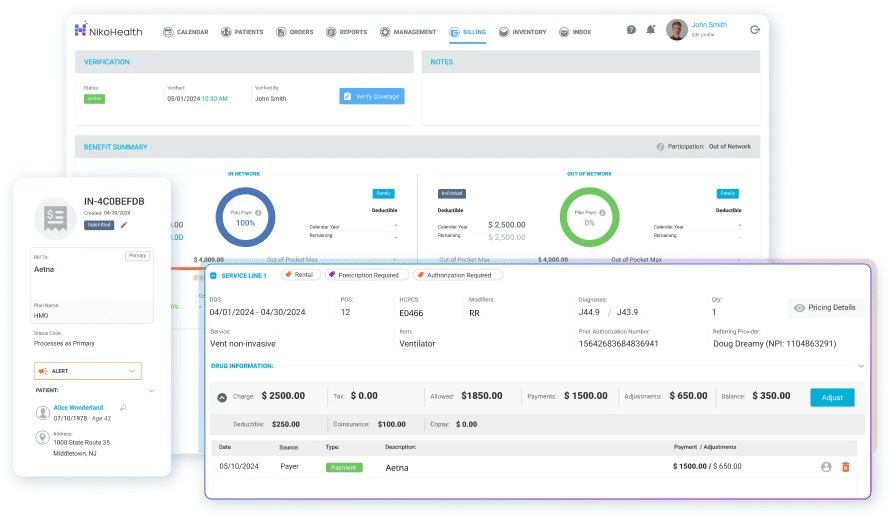
NikoHealth is the modern HME/DME platform that replaces legacy systems with one intuitive, cloud-based solution — consolidating billing, inventory, delivery, order management, and reporting within a single system. For DME providers that are currently stitching together billing software, a separate inventory tool, and manual delivery logs, NikoHealth eliminates that fragmentation.
Key Billing & RCM Features
- Automated claims scrubbing — every claim is checked against payer rules before submission, catching errors that generate denials
- Automated eligibility verification at intake — insurance issues are identified before an order ships, not after a claim rejects
- Automated remittance posting — ERA/EOB files are processed automatically, eliminating manual data entry from your cash posting team’s workload
- Denial management workflows — rejected claims are tracked by reason code, routed for correction, and resubmitted without falling through the cracks
- Recurring rental invoice automation — capped rental billing cycles run without manual triggers or spreadsheet tracking
- Payer rules management — payer-specific requirements are managed within the system, not in someone’s head or a shared document
Beyond Billing: The All-in-One Advantage
Most DME billing platforms stop at the claim. NikoHealth covers the full operational lifecycle — real-time inventory visibility with reorder alerts, order fulfilment tracking, paperless e-signature delivery via iOS and Android mobile app, and revenue cycle dashboards that surface collections, denial rates, and days in AR in real time.
NikoHealth’s open API also connects with AI-powered intake and compliance tools including Tennr, CompliantRx, Notable Systems, and Celeritas — making it the operational core for providers building a modern, AI-augmented DME business.
Unlike legacy systems that treat billing as the endpoint, NikoHealth functions as a unified platform that extends into clinical coordination, logistics, and financial performance, positioning itself as both advanced hme management software and a scalable best dme billing software solution for high-volume providers.
Best For: HME/DME providers of any size that are running on legacy systems (Brightree, Bonafide, or older platforms) and need a modern, cloud-based replacement that handles billing and operations end-to-end. Particularly strong for multi-location operators who need centralized visibility across sites.
2. Brightree — Enterprise-Grade DME Billing with Deep ResMed Integration
Brightree is one of the most widely deployed DME/HME platforms in the United States, particularly among mid-to-large providers. Originally a standalone DME software company, Brightree was acquired by ResMed in 2016, which means it is most tightly integrated with ResMed’s respiratory device ecosystem — making it a natural fit for providers whose business is concentrated in CPAP, ventilators, and oxygen.
Key Features
- Claims management with payer-specific rules engine
- Insurance eligibility verification and patient intake
- ERA/EOB remittance processing
- Denial tracking and reporting
- Configurable billing analytics dashboards
Considerations
Brightree is a mature platform with deep functionality, but legacy architecture means steeper learning curves and higher training overhead for new staff. Providers outside the ResMed ecosystem may find the integrations less relevant and the overall cost harder to justify versus newer cloud-native alternatives.
Best For: Mid-to-large DME providers already embedded in the Brightree or ResMed ecosystem, particularly those in respiratory and sleep therapy with high resupply volume.
3. WellSky (formerly Mediware) — High-Volume Operations Management
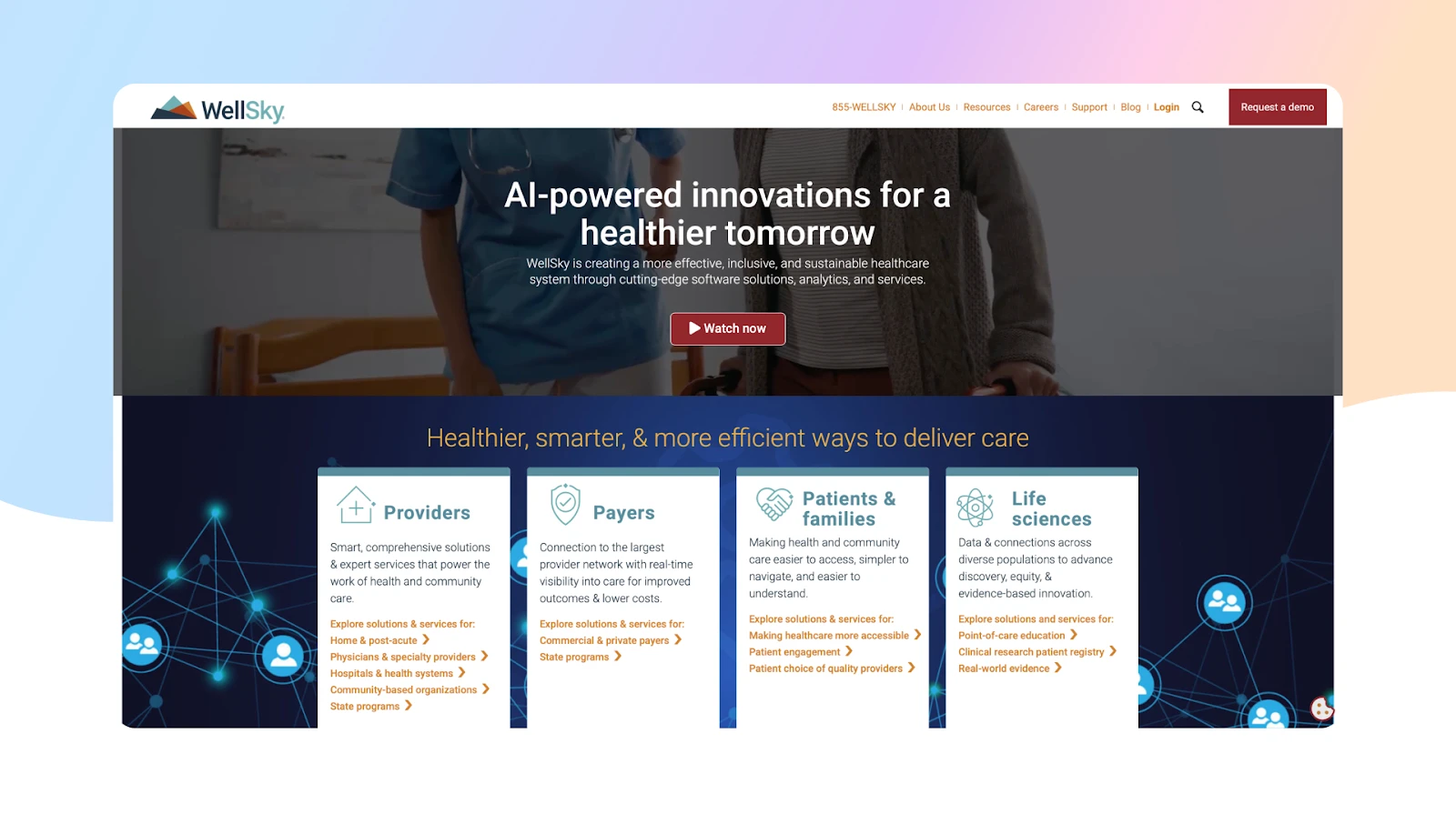
WellSky serves large, complex HME/DME organizations with significant order volume and multi-site operations. The platform covers revenue cycle management, referral management, scheduling, compliance, and analytics — with particular depth in the post-acute care market that often overlaps with DME provision.
Key Features
- Revenue cycle management with denial tracking
- Claims submission and payer rules compliance
- Audit trail documentation for billing compliance
- Billing performance dashboards and analytics
Considerations
WellSky’s strength is scale and depth in post-acute care settings. The platform is best suited to organizations with dedicated IT and implementation resources — smaller or mid-size DME businesses often find the complexity and onboarding investment disproportionate to their needs.
Best For: Large DME/HME organizations with high transaction volumes, multi-location operations, and internal IT capacity to manage a complex implementation.
4. Kareo (Tebra) — General Medical Billing Adapted for DME
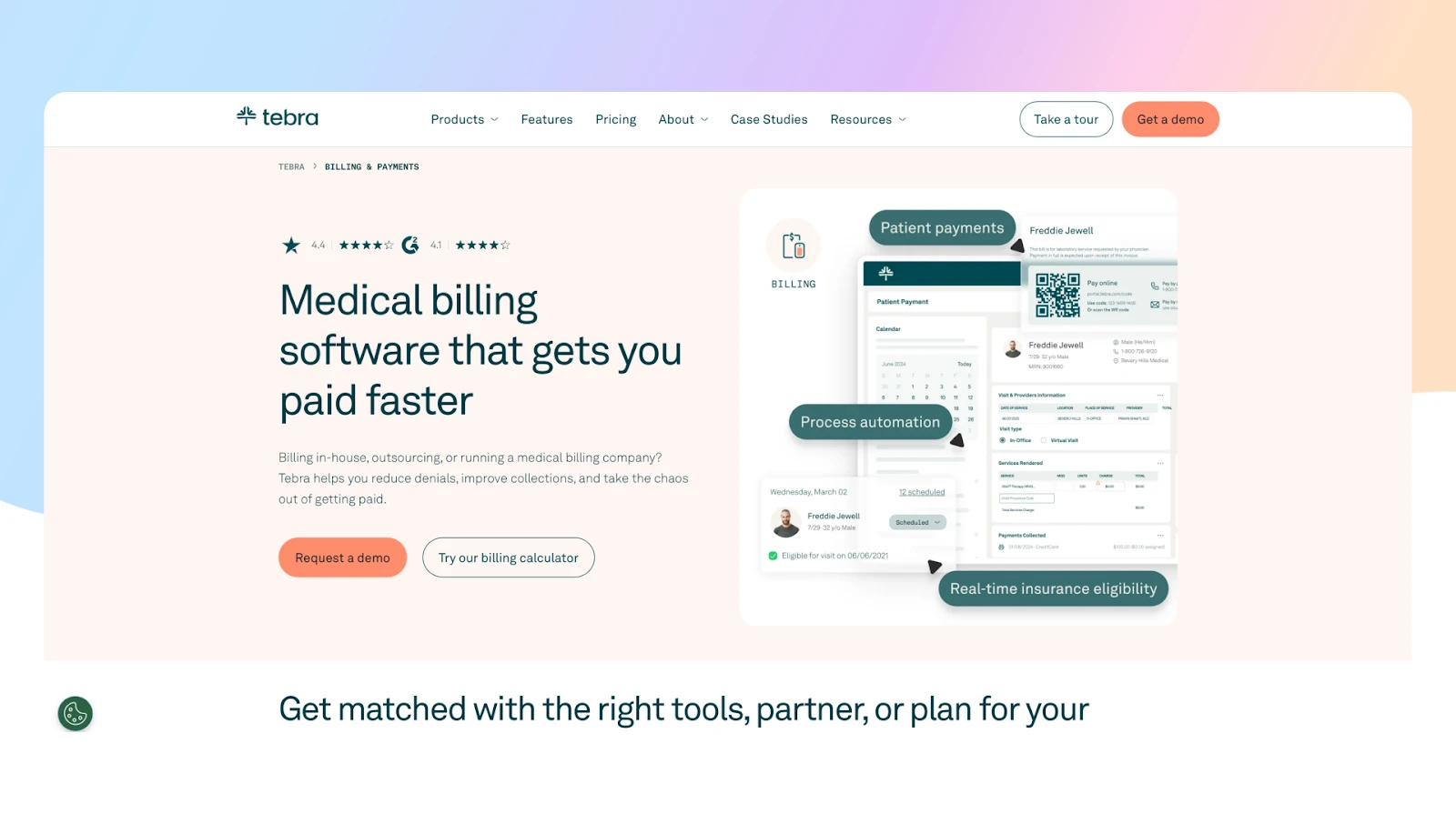
Kareo — now rebranded as Tebra following a merger with PatientPop — is a general-purpose medical billing platform. It is not built specifically for DME but is used by some smaller DME practices that prioritize familiarity with a widely used billing tool over DME-specific functionality.
Key Features
- Medical billing and claim submission
- Insurance eligibility verification
- Reporting and billing analytics
Considerations
The platform does not natively handle DME-specific workflows: HCPCS code management, recurring rental billing, CMN documentation, or DMEPOS compliance tools require workarounds. For DME providers, the gap between a general billing platform and a DME-native one tends to grow as claim volume and payer complexity increase.
Best For: Very small DME practices with low claim volume that already use Kareo across other care settings and want to avoid switching platforms.
5. FrameworkLTC — Long-Term Care Billing with DME Overlap
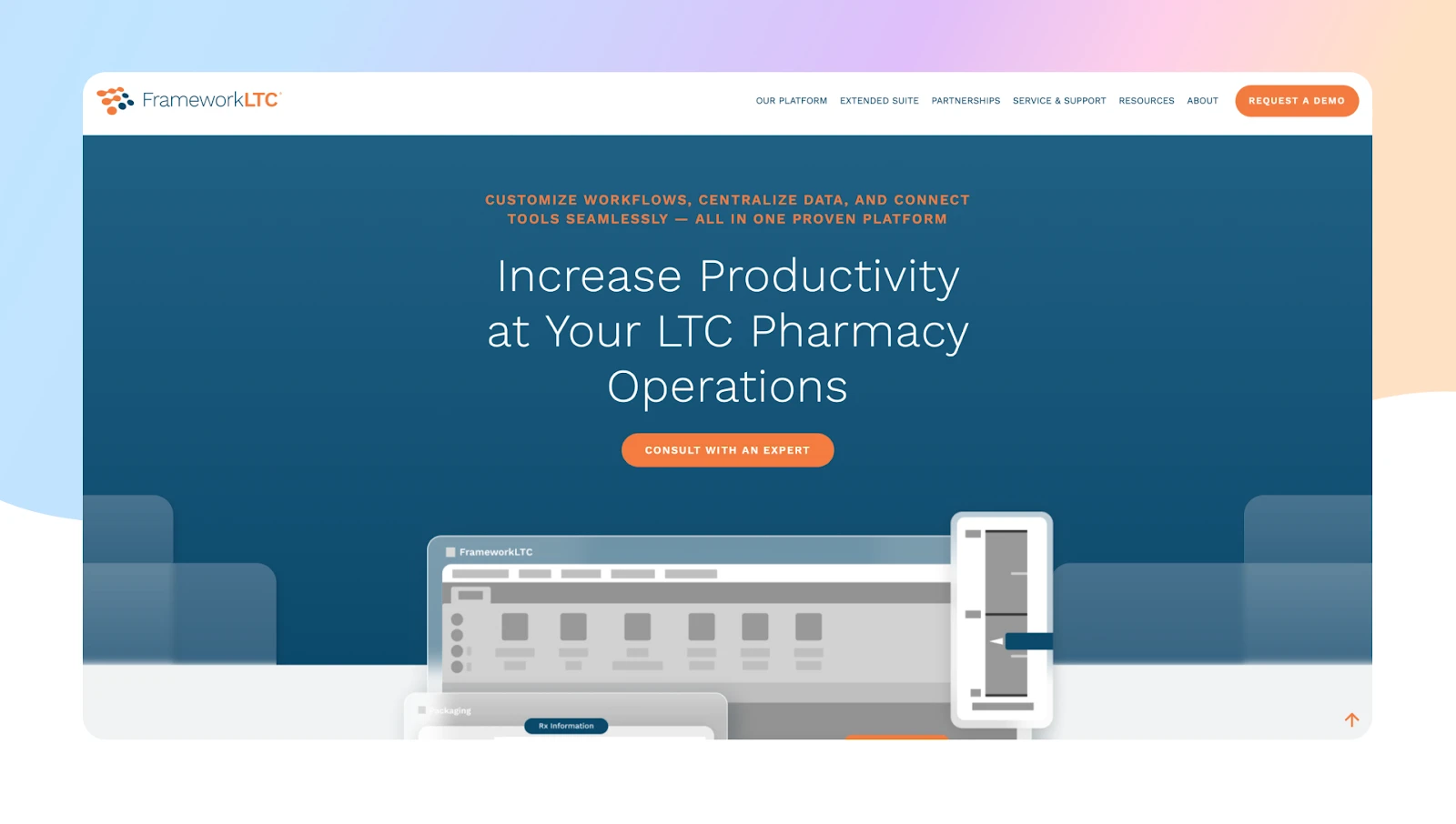
FrameworkLTC is primarily designed for long-term care pharmacy billing but serves DME providers with overlapping LTC relationships. It offers claims management, pharmacy integration, and compliance tracking suited to the LTC billing environment.
Key Features
- Claims management for LTC billing environments
- Payer-specific rule management
- Compliance tracking and billing documentation
- Pharmacy billing integration for DME/LTC overlap
Considerations
FrameworkLTC’s billing logic is optimized for the LTC pharmacy environment, which operates under different payer structures and reimbursement rules than standard HME/DME. Providers whose primary business is Medicare Part B DME claims, DMEPOS-accredited product lines, or high-volume recurring rental billing will find the platform’s DME-specific functionality limited.
The lack of native HME inventory management, delivery tracking, and DMEPOS compliance workflows means DME providers will need to supplement with additional tools, reintroducing the fragmentation that purpose-built DME platforms are designed to eliminate.
Best For: DME providers whose business is deeply integrated with long-term care facilities and pharmacy dispensing, where LTC billing expertize is more valuable than standard HME/DME feature depth.
How to Choose the Right DME Billing Software: 5 Questions to Ask
Before you schedule demos or request pricing, these five questions will help you filter your shortlist based on your actual operational needs — not just feature checklists.
- Does it handle DME-specific workflows natively? Look for HCPCS code management, CMN documentation, capped rental billing, and DMEPOS compliance tools built in — not bolted on.
- How does it handle claim denials? Denial management should be more than a report. Look for automated reason-code routing, correction workflows, and resubmission tracking so rejected claims don’t sit in a queue.
- Does it automate remittance posting? Manual ERA/EOB processing is a major time drain for billing teams. Platforms that automate this free your staff to focus on exceptions, not data entry.
- What does implementation actually look like? Ask for a specific timeline, data migration plan, and what happens to your open claims during the transition. Vague answers on implementation are a red flag.
- Can it grow with your operation? If you add locations, add product lines, or want to integrate AI-powered intake tools, will the platform support that without a new implementation?
DME Billing Best Practices That Software Should Support
The right software doesn’t just process claims – it enforces billing best practices at every step. Here’s what a well-configured DME billing platform should do automatically.
Verify Eligibility Before the Order Ships
Insurance issues caught before delivery are fixable. Insurance issues caught after claim submission are denials. Automated eligibility verification at intake (checking active coverage, deductibles, and authorization requirements) prevents the downstream billing problems that erode collections rates.
Scrub Every Claim Before Submission
Pre-submission claims scrubbing checks each claim against payer-specific rules, required modifiers, and documentation completeness before it leaves your system. Providers that automate this step consistently report lower denial rates and fewer manual corrections. Every claim that clears scrubbing is a claim that doesn’t require a billing team member to investigate a rejection or denial later.
Automate Recurring Rental Billing
Manual recurring rental management — tracking billing months, cap thresholds, and payer rules per item — is a consistent source of revenue leakage for DME providers. Software that automates recurring invoice generation, tracks Medicare capped rental months, and alerts staff when rental thresholds approach eliminates the manual oversight burden.
Don’t Let Denials Age
Denied claims have a timely filing window. Platforms with active denial management workflows — routing rejections by reason code, prompting corrections, and tracking resubmission deadlines — recover revenue that manual processes allow to expire. Denial rate and denial resolution time are two of the most important metrics your billing software should surface in real time.
Best DME Billing Software Comparison FAQ
What is the best DME billing software in 2026?
The best DME billing software for most providers in 2026 is one that automates the full claims lifecycle — from eligibility verification to remittance posting — within a single platform. NikoHealth is purpose-built for HME/DME operations and consolidates billing, inventory, delivery, and denial management in one cloud-based system. Brightree and WellSky are alternatives suited to providers already embedded in those ecosystems.
What does DME billing software do?
DME billing software automates the financial and administrative processes involved in reimbursing durable medical equipment claims. Core functions include verifying patient insurance eligibility, scrubbing claims for errors before submission, managing payer-specific rules, tracking denial reasons, and posting remittances from ERA/EOB files. The goal is to increase clean-claim rates, reduce days in accounts receivable, and ensure nothing falls through the cracks.
How does DME billing software differ from general medical billing software?
General medical billing software is built around physician and hospital visit billing. DME billing involves different regulatory requirements — DMEPOS accreditation, Certificate of Medical Necessity (CMN) management, recurring rental billing cycles, Medicare capped rental rules, and HCPCS code compliance. Software designed specifically for DME handles these workflows natively; general billing tools require significant workarounds.
What features should I look for in HME billing software?
Look for: automated eligibility verification at intake, pre-submission claims scrubbing against payer rules, automated ERA/EOB remittance posting, denial management workflows with reason-code tracking, recurring rental invoice automation, and real-time reporting on collections, denial rates, and days in AR. Integration with your inventory and delivery workflows is a significant operational advantage.
How long does it take to implement DME billing software?
Implementation timelines vary by provider size and complexity. For small-to-medium DME businesses, expect 90 to 120 days for full onboarding, including data migration from legacy systems, staff training, and payer configuration. Larger multi-location operations may require longer timelines. Choosing a vendor with structured onboarding and dedicated data migration support reduces disruption during the switch.
Does DME billing software integrate with EMR or EHR systems?
Many DME billing platforms offer limited or per transaction fee based API integration or direct connections with EHR systems to pull referral data, CMN documentation, and patient demographics without duplicate data entry.