
You have the million-dollar idea. You have the business plan sketched out on a napkin. Now, you need the digital address. You need a domain name.
It sounds simple. You open a registrar’s website, type in your brilliant name, click “add to cart,” and pay. Five minutes of work, right?
In reality, for serious entrepreneurs, startups, and creatives, the domain registration process is rarely a five-minute sprint. It is often a winding, frustrating, and surprisingly time-consuming journey. It’s a critical bottleneck where initial enthusiasm collides with the hard reality of a crowded internet.
Let’s break down the real timeline of securing a domain name in 2024, from the initial spark of an idea to the final confirmation email, highlighting the inefficiencies that waste your precious time.
The Brainstorming Black Hole: Day 1 to Day 3 (Time lost: 4–10 hours)
The clock starts ticking the moment you decide on a name for your venture. You assume the “good names” are taken, but you’re optimistic.
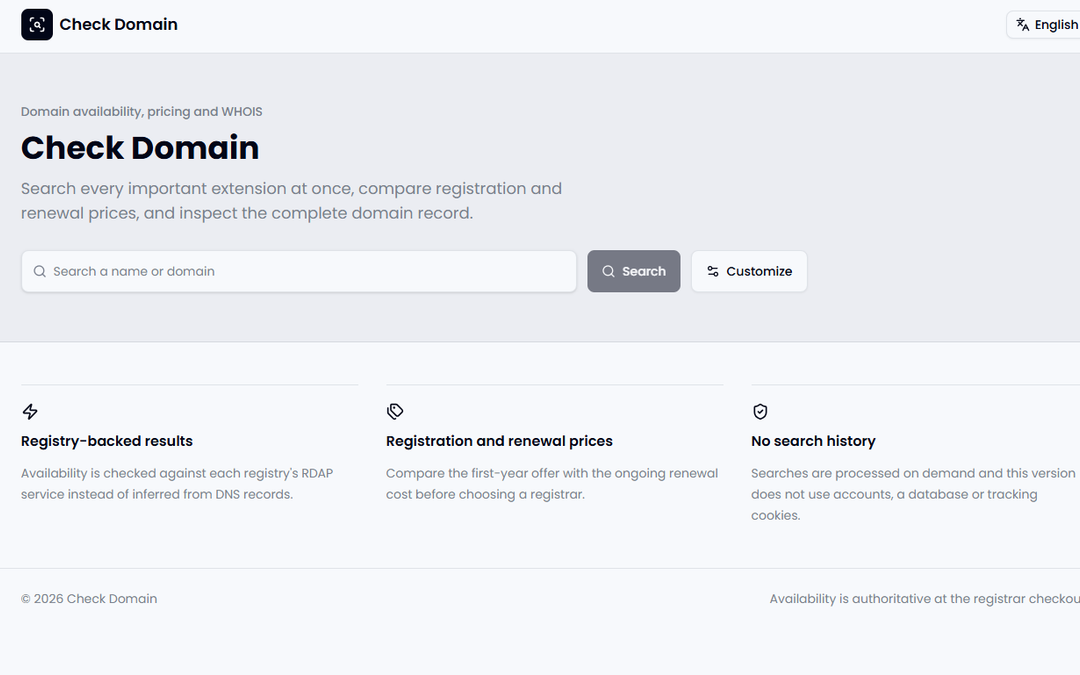
You open a standard registrar to Check Domain availability. You type in your first choice.
- yourgreatstartup.com – Taken.
- yourgreatstartup.net – Taken.
- yourgreatstartup.io – Taken by a speculator asking for $5,000.
Panic sets in. Now begins the brainstorming black hole. You spend hours—often spread across several days—trying variations. You consult a thesaurus. You try portmanteaus (combining words). You try adding “ly,” “ify,” or “io” to the end of words.
According to recent data from Verisign, the registry operator for .com and .net, there were approximately 173.4 million domain name registrations in the .com and .net domains alone at the end of 2023. Every common dictionary word is gone.
The Efficiency Pain Point: This phase is pure creativity drain. You are not building your product; you are agonizing over linguistic availability. Most registrars offer basic suggestions, but they are often uninspired, pushing premium domains you don’t want to afford.
The Validation Gauntlet: Day 4 to Day 5 (Time lost: 3–6 hours)
Let’s say you finally find a combination that is free. Let’s call it getyournewthing.co. It’s not your first choice, but it’s available, relatively short, and pronounceable.
Now you enter the validation gauntlet. A domain name cannot exist in a vacuum; it must represent a cohesive brand identity. This requires a multi-step investigation for every single name on your shortlist.
- The Trademark Search: You must run a search through your regional trademark database (e.g., USPTO in the United States). Is someone already using this phrase in commerce for a similar class of goods? This step is legally mandatory but incredibly tedious.
- The Social Media Handle Check: A unified brand presence is vital. You need to check if the matching handle is available on Instagram, X (Twitter), LinkedIn, TikTok, and Facebook.
- Scenario: The domain is free, but yournewthing on Instagram is taken by an inactive account that hasn’t posted since 2015. Do you try to acquire it, or start the brainstorming process over?
- The Spoken Word Test: Say the domain out loud to three different people. Can they spell it correctly after hearing it once? If they struggle with ph vs f or to vs 2, you need to reconsider.
The Efficiency Pain Point: This is fragmented research. You are checking a domain registrar, then opening a new tab for the trademark office, then opening another five tabs for social media networks. There is no centralized tool to validate a brand identity across all these channels simultaneously.
The Technical Snag & WHOIS Delay: Day 6 (Time lost: 1–2 hours)
You’ve passed the validation gauntlet. You are emotionally attached to getyournewthing.co. You head back to the registrar to finalize the domain registration process.
You fill out the registrant contact information form. Name, address, email, phone number.
Then, you hit a technical snag. You want WHOIS privacy protection (which hides your personal information from the public database). Most reputable registrars now include this for free due to GDPR, but some still try to upsell it.
More importantly, there is the propagation delay. Once you click “buy,” the DNS (Domain Name System) servers worldwide need to update to recognize your new domain.
While registrars often say this happens “instantly,” the technical reality is different. It can take anywhere from a few minutes to—in extreme cases—48 hours for a domain to fully propagate globally. Until it does, your emails might bounce, and your website might not resolve for users in certain regions.
The Efficiency Pain Point: The checkout process itself has become a minefield of upselling. Do you want professional email? Website builder? SEO tools? Security monitoring? Navigating these unnecessary add-ons slows down the simple act of paying for what you want.
Total Real-World Timeline
What you thought was a 5-minute task has actually consumed roughly 8 to 18 hours of focused effort spread over nearly a week.
| Phase | Activity | Real-World Time Investment |
| Phase 1 | Initial brainstorming & single domain availability checks | 4–10 hours |
| Phase 2 | Semantic hunting for available alternatives & checking variations | 2–4 hours |
| Phase 3 | Brand validation (Trademarks, Social Handles) | 1–2 hours |
| Phase 4 | Technical checkout & propagation wait | 1–2 hours |
| Total | From Idea to Final Confirmation | 8–18 hours |
A Better Way: Fixing the Broken Workflow
The traditional Check Domain workflow is broken because it treats domain registration as a simple sales transaction rather than the critical first step of brand creation.
Entrepreneurs do not need just a search box; they need an intelligence engine.
Imagine a platform that combines all these fragmented steps into one unified workflow:
- You enter keywords related to your idea.
- The tool uses AI to generate hundreds of available, brandable names (not just appending random numbers).
- It instantly cross-references availability against major global trademark databases.
- It simultaneously checks availability across top-tier social media platforms.
- It allows for one-click registration with built-in privacy protection.
We are long past the era where the domain registration process was the simplest part of starting a business. As the internet landscape becomes increasingly crowded, securing the right digital identity requires better tools, deeper intelligence, and a more realistic approach to the time investment involved. Don’t underestimate the hunt; start smart, and you’ll save days of frustration.